
Generator Services
Standby Generator Installation
Whole-home and commercial standby systems, sized properly and installed by our own licensed crew — permits and inspection included, not left for you to chase.
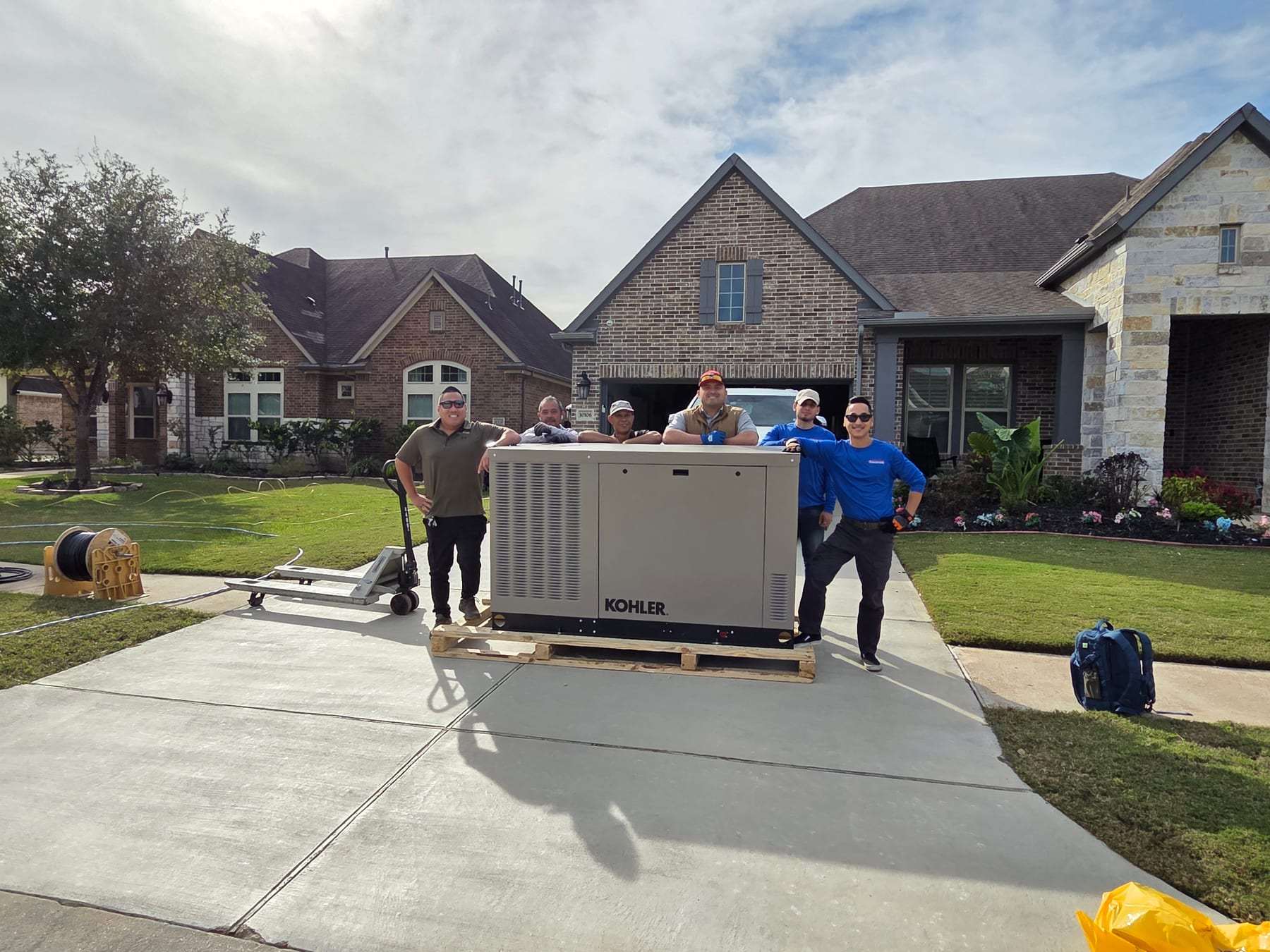
- Kohler and Generac — we install both
- Permit pulled and inspection coordinated by us
- Load sizing before you get a price, not after
- Licensed under TECL #37583
Standby, not portable
A standby generator is permanently installed outside the house, wired into your electrical system through an automatic transfer switch, and fuelled from your gas line or a propane tank. When the utility drops, it starts and transfers on its own — typically within seconds, with nobody at home needing to do anything.
That is the whole difference from a portable unit. A portable has to be dragged out, fuelled, started and run on extension cords, and it cannot safely power hardwired circuits like your HVAC, well pump or oven. For a storm that lasts a few hours it is workable. For the multi-day outages this part of Texas actually gets, it is not.
Sizing comes first
The most common way a generator install goes wrong is being sized on a guess. Undersize it and the unit runs at its limit, struggles on motor startup and wears out early. Oversize it and you have paid for capacity that never gets used and a unit that runs inefficiently at light load.
We work out your running load, add the largest single startup surge, then allow headroom so continuous draw stays at or below 80% of the generator's rating — the 80% rule. You can get a rough number yourself with the sizing tool, but the binding version needs somebody looking at your actual panel.
What the job involves
- 1Site assessmentPanel, service size, gas supply, and where the unit can legally and practically sit — setbacks from windows, doors and the property line all constrain this.
- 2Written proposalEquipment, transfer switch, electrical and gas work, pad, permits and inspection — itemised, so you can see what each part costs.
- 3PermitPulled with whichever authority has jurisdiction over your address. In Fort Bend County that may be your city or the county, depending on where you sit.
- 4InstallationPad set, generator placed, gas run and sized for the unit’s demand, electrical run, automatic transfer switch installed at the panel.
- 5Inspection and commissioningWe meet the inspector, then start the unit, test the transfer under load, and walk you through the controls and the maintenance schedule.
The transfer switch matters more than people expect
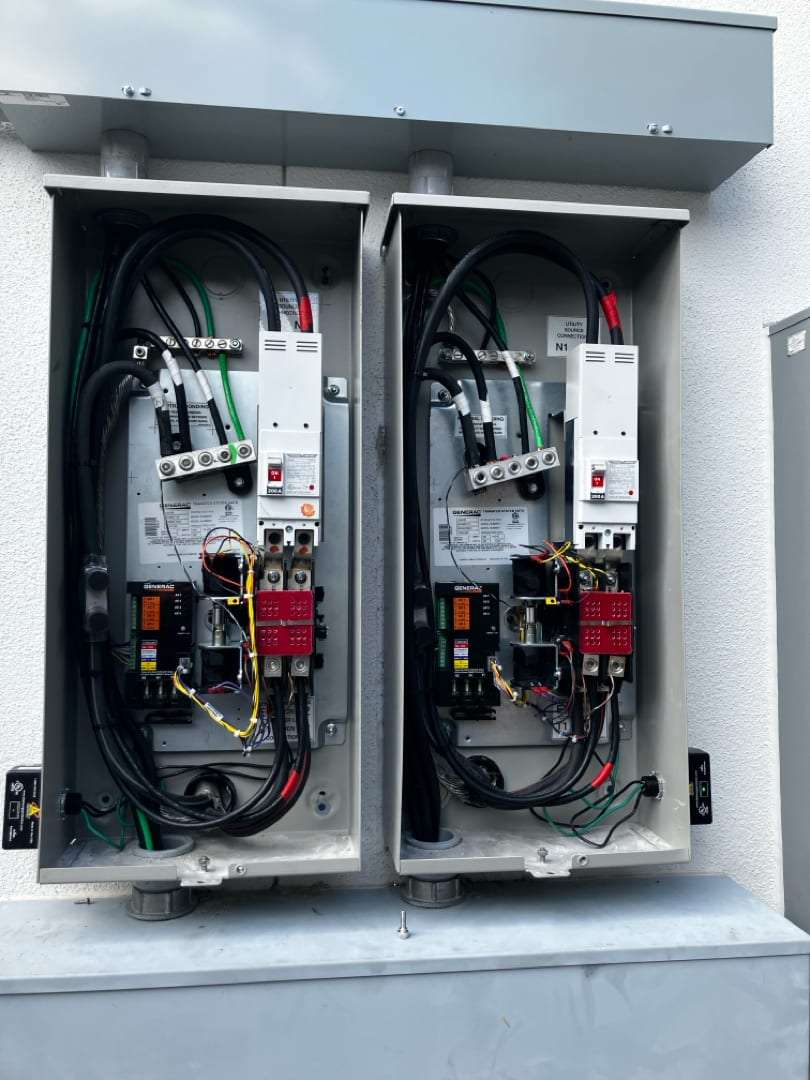
The automatic transfer switch is what separates your house from the grid when the generator runs. It is a safety device as much as a convenience one — without proper transfer, a running generator can backfeed the utility line and endanger anyone working on it. It also determines what actually gets powered: a whole-home switch covers everything, while an essential-circuits switch covers a defined subset for considerably less money.
Natural gas or propane
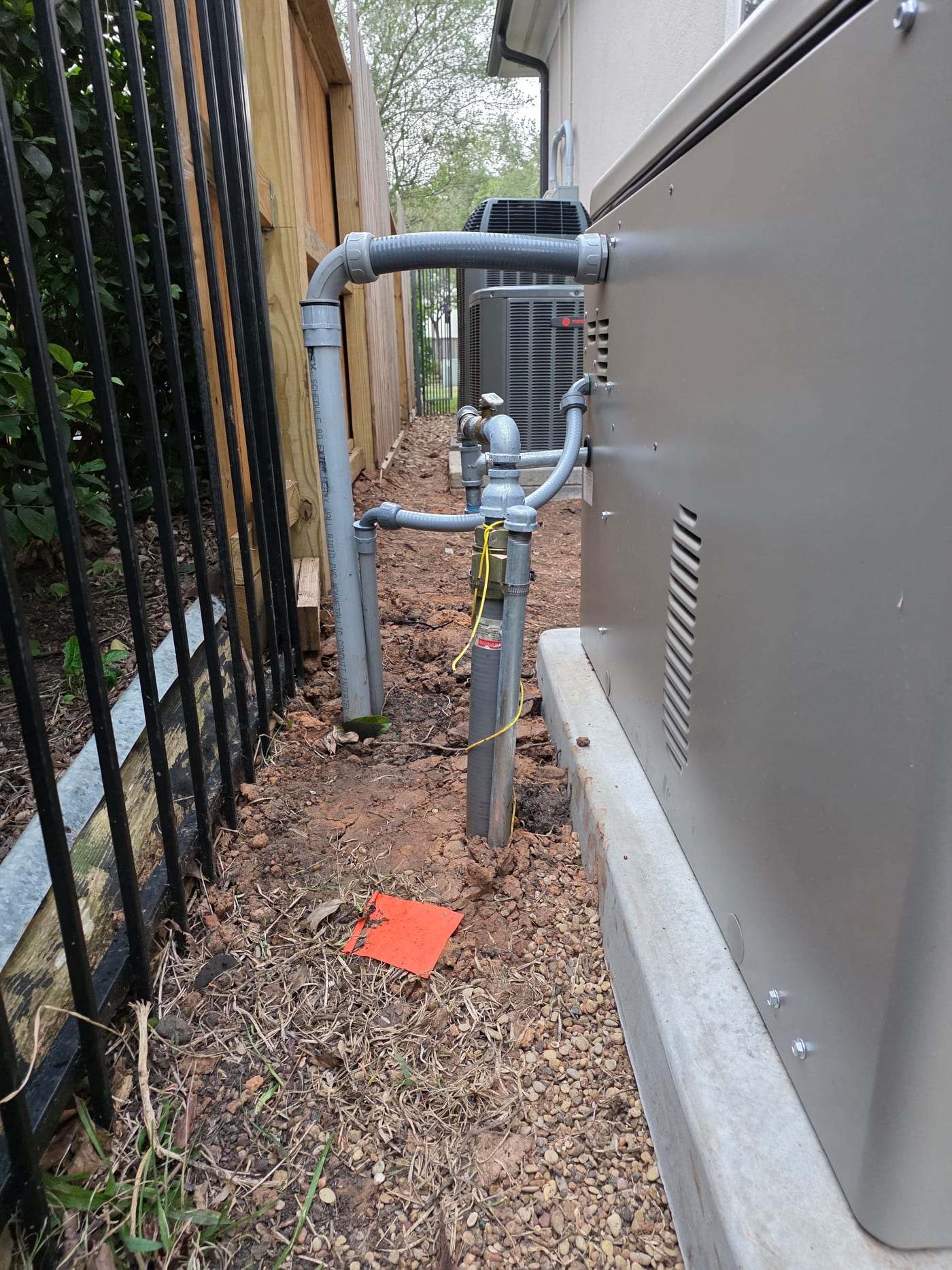
Most homes here run on natural gas because the supply is already at the property and never needs refilling. Propane is the answer where there is no gas line, and it stores indefinitely. The trade-off is supply duration: a gas line runs as long as the utility does, a tank runs as long as what is in it.
Either way the fuel line has to be sized for the generator's demand. An undersized gas run is one of the most common reasons a unit that passed inspection still struggles under load, and it is not something you find out about until the first real outage.
Residential and commercial
Air-cooled units from roughly 10 to 26 kW cover most homes. Above that you are into liquid-cooled equipment, which is what larger houses and commercial buildings need — see commercial generators for facility work. We also handle the electrical contracting side, which matters when a job touches both.
After it's installed
A standby generator is a machine with an engine, and it needs servicing on schedule to stay under warranty and to actually start when it matters. Our GenWatch service plans start at $35/month, or see maintenance and service for what a visit covers.
Common questions
What is the 80% rule for generator sizing?
Do I need to back up the whole house, or just some circuits?
How long does a generator installation take?
Can I run a standby generator on natural gas or propane?
Do I need HOA approval for a generator?
Do I need a permit to install a standby generator in Texas?
Get a straight answer on what it costs
Tell us about your home or building and we'll come out, size it properly and put a written number in front of you. No charge for the visit.
TECL #37583 · Kohler Certified · Generac Authorized Dealer ·BBB Accredited Business · Veteran & family owned