
Commercial
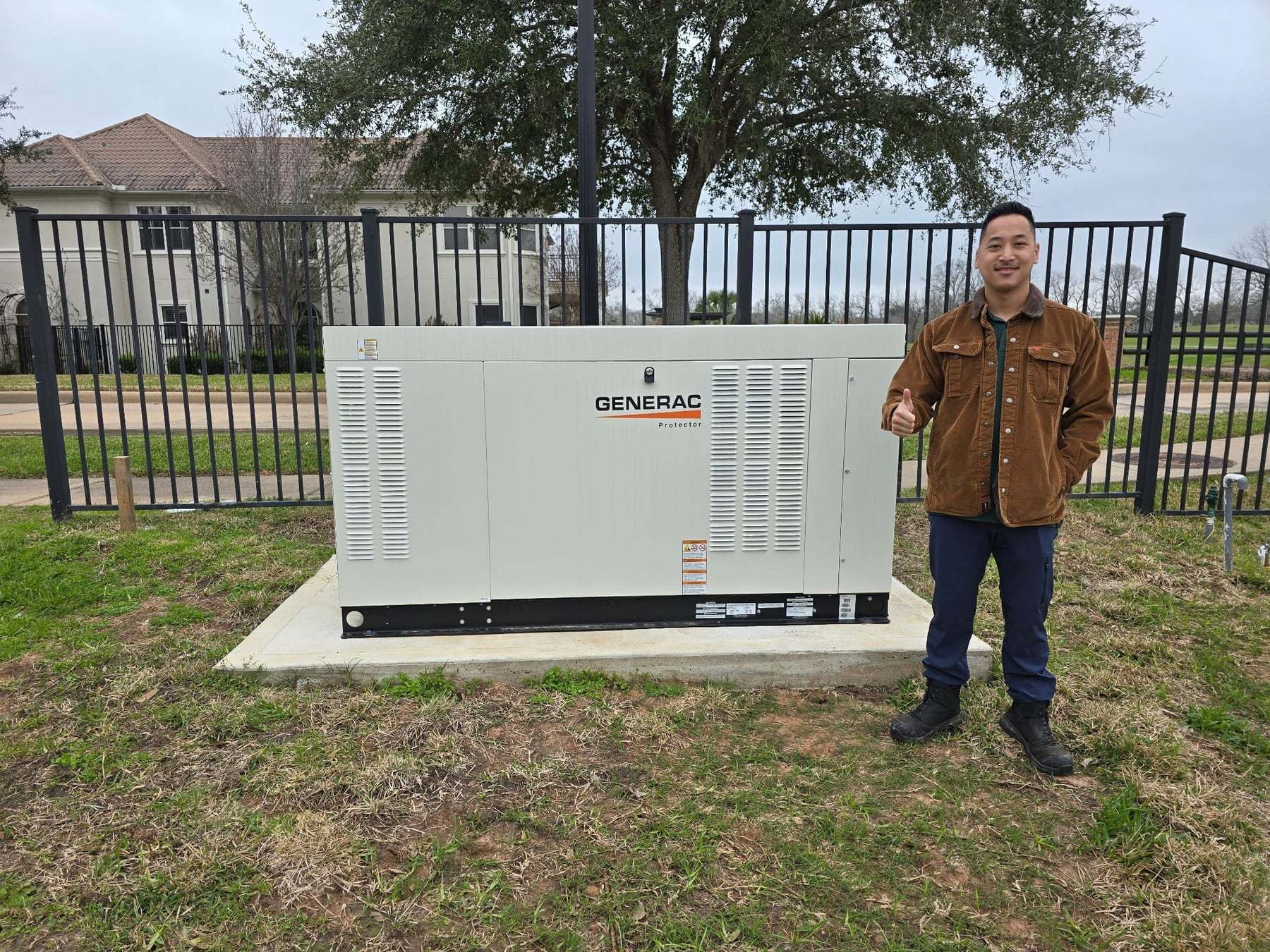
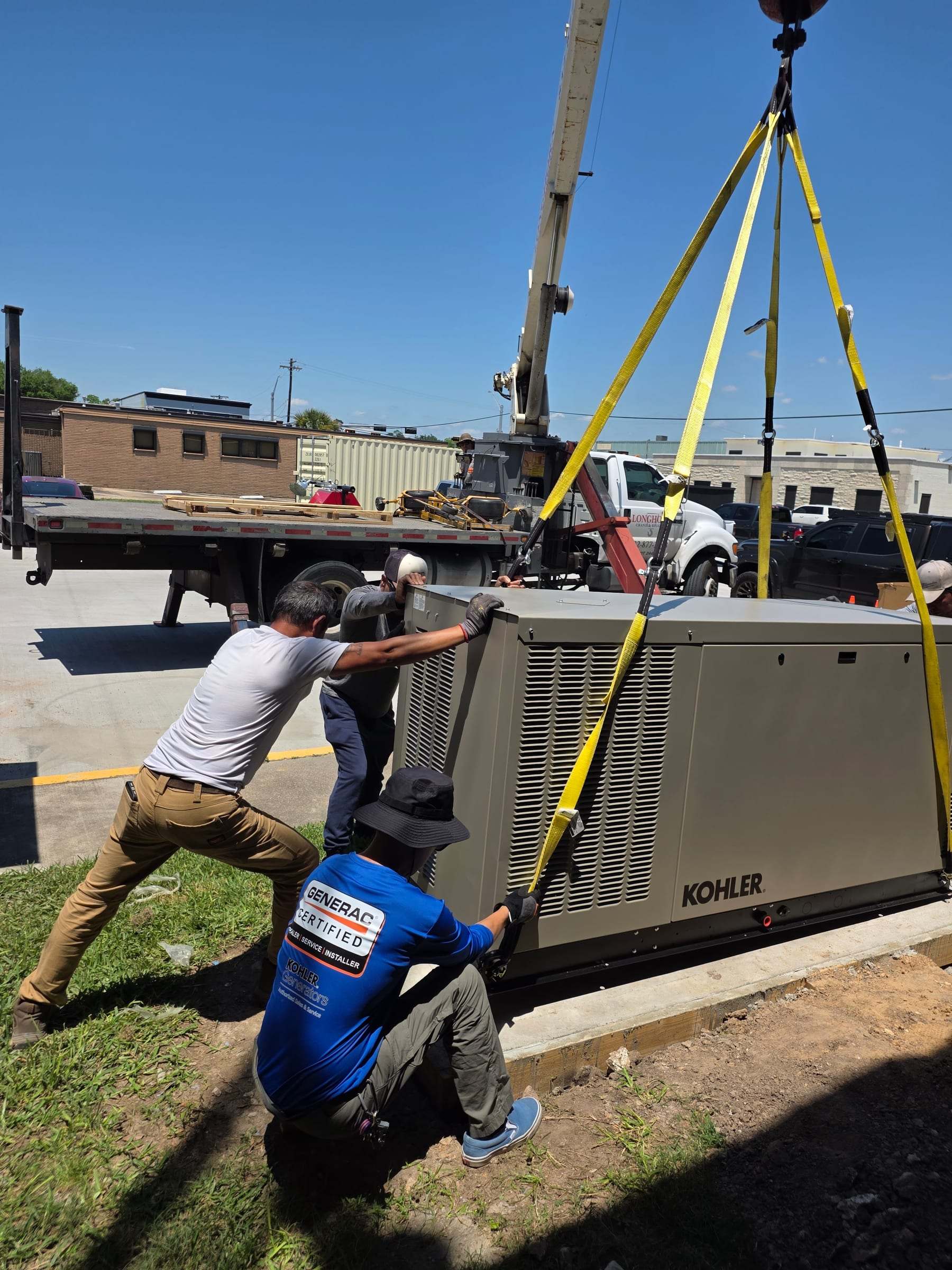
Commercial Generator Installation & Repair
Liquid-cooled standby power for facilities that cannot afford to go dark — specified, installed, permitted and maintained by one licensed contractor.
- Kohler and Generac liquid-cooled
- Load studies before equipment selection
- Service plans up to 150 kW
- Texas Electrical Contractor TECL #37583
Where commercial differs from residential
Past roughly 26 kW you leave air-cooled equipment behind and move to liquid-cooled units, and the job changes character with it. Three-phase service, larger transfer switches, fuel supply that has to be engineered rather than assumed, and in many cases code requirements around life-safety and egress circuits that do not apply to a house.
Sizing stops being a rule of thumb too. Commercial load profiles have motor starting characteristics, non-linear loads from drives and UPS systems, and future growth to account for. That warrants an actual load study, not a checkbox estimator — the sizing tool on this site is built for homes and will not scope a building.
Who we do this for
- Medical and dental
- Refrigerated medication, powered chairs, sterilisers and records systems that cannot simply stop.
- Restaurants and food service
- Walk-ins and reach-ins. A single lost freezer of product often exceeds a year of service plan.
- Retail and multi-tenant
- Lighting, POS and card terminals. Closed during an outage is revenue you never recover.
- Warehouse and light industrial
- Dock equipment, compressors, process loads and life-safety systems.
- Offices and professional space
- Servers, network gear and the ability to keep working through a regional outage.
Service and repair
Commercial units need servicing more often than residential ones, because they tend to carry heavier loads and run more. Our GenWatch plans cover liquid-cooled equipment up to 150 kW — pricing on the service plans page. We also take on repair work regardless of who installed the unit, including warranty service on Kohler and Generac.
For heavier commercial applications we also work with Cummins equipment. Note that we hold manufacturer certification with Kohler and Generac specifically.
Load bank testing. A generator that exercises weekly with no load attached proves the engine turns over. It proves nothing about whether the unit will carry your building. For commercial standby — particularly anything supporting life safety — periodic load bank testing is how you find out before the outage does.
One contractor for both scopes
If the project also involves a finish-out or a service upgrade, we handle the electrical contracting side under the same license — so the generator, the transfer switch and the distribution work are not split across two trades who each assume the other owns the interface.
Scoping a commercial project
Call (346) 420-5744 or send us the details. If you have drawings, a panel schedule or an existing one-line, send those too — it shortens the process considerably.
Common questions
What is the 80% rule for generator sizing?
Do I need to back up the whole house, or just some circuits?
Do I need HOA approval for a generator?
Do I need a permit to install a standby generator in Texas?
Get a straight answer on what it costs
Tell us about your home or building and we'll come out, size it properly and put a written number in front of you. No charge for the visit.
TECL #37583 · Kohler Certified · Generac Authorized Dealer ·BBB Accredited Business · Veteran & family owned